

SAFETY
A daily limit, built in
Each approved sweetener has an acceptable daily intake. The NHS says you do not need to track it, because eating habits are factored into where it can be used.
See the numbersWHAT THE GUIDANCE SAYS
Sweeteners turn up in more than fizzy drinks.
The NHS lists drinks, desserts, ready meals, cakes, chewing gum and toothpaste. Every sweetener used in Great Britain is safety assessed first, given limits on where and how much it can be used, and named on the label.

READ THE E NUMBER and the small print
THE SHORT ANSWER
Safety limits are set before a sweetener
reaches the shelf, not left to shoppers.
SAFETY
Each approved sweetener has an acceptable daily intake. The NHS says you do not need to track it, because eating habits are factored into where it can be used.
See the numbersLABELS
Aspartame products must warn they contain a source of phenylalanine. Products over 10% added polyols must warn of possible laxative effects.
Check a labelSOURCES
The approved list includes steviol glycosides from stevia (E960a) alongside sucralose, saccharin and aspartame.
Where they fitGeneral information only, not medical advice. For advice about your own health, speak to a doctor, pharmacist or other qualified health professional.
A QUICK LABEL CHECK
Pick a sweetener from an ingredients list to see its E number and what the label has to tell you. The bar shows how much extra label warning the rules attach to it.
Based on NHS guidance on sweeteners and the GOV.UK list of approved additives and E numbers. General information, not medical advice.
TWO NUMBERS WORTH KNOWING
The internationally agreed limit for aspartame,
and what it means in diet drinks.
40 mg
Acceptable daily intake per kg of body weight
In 2023 the WHO and FAO expert committee, JECFA, found no sufficient reason to change the previously established ADI of 0–40 mg per kg of body weight.
ASPARTAME ADI · JECFA 2023
9–14 cans+
Cans of diet drink a 70kg adult would need to exceed it
WHO's example assumes 200 or 300 mg of aspartame per can and no other intake. The same year, IARC classed aspartame as 'possibly carcinogenic' (Group 2B), citing limited evidence.
IN PRACTICE · WHO
Source: WHO news release, Aspartame hazard and risk assessment results released, 14 July 2023.
READING THE LABEL
Sweeteners appear by name or E number in the ingredients. A few checks make a label easier to read.
Sweeteners on the approved list run from E420 sorbitol to E969 advantame. Aspartame, for example, may appear as aspartame or E951.
Products with aspartame carry a separate warning that they contain a source of phenylalanine, for people with phenylketonuria.
Polyols include sorbitol, xylitol and erythritol. Above 10% added polyols, the label must warn that excessive consumption may have laxative effects.
The NHS notes fizzy drinks are linked to dental erosion because of their acid, whether they contain sugar or sweeteners.

WHERE THEY FIT
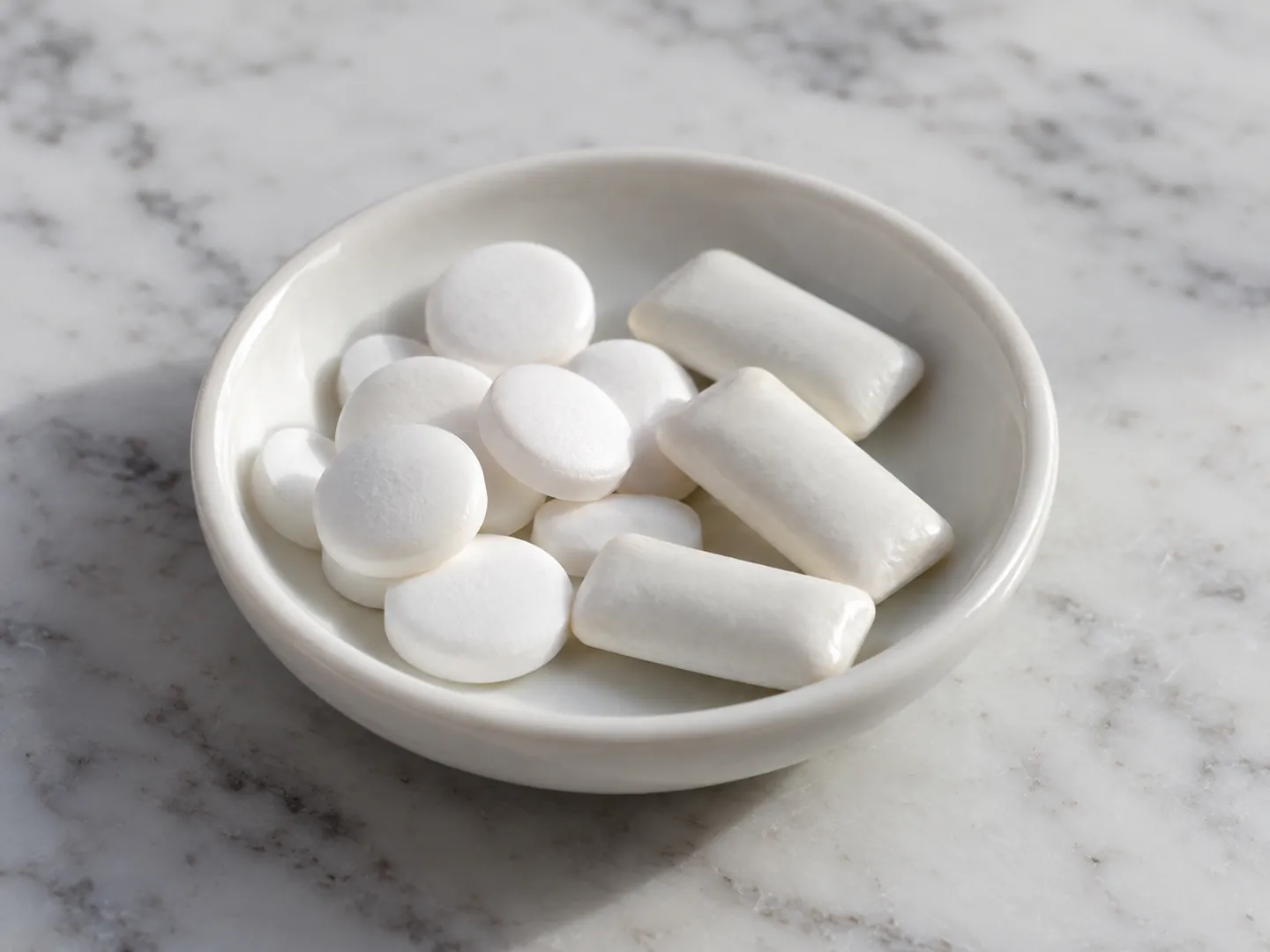
The NHS says sweeteners will not necessarily make a food healthy but can help people cut sugar, and sugar-free products made with them can help reduce the risk of tooth decay. It describes research on sweeteners and wider health as mixed.
In 2023 the WHO issued a conditional guideline advising against using non-sugar sweeteners to control body weight, saying long-term use showed no benefit for body fat. It does not cover polyols, toothpaste or medicines, or people with pre-existing diabetes.
Questions
The NHS says all sweeteners in Great Britain undergo a rigorous safety assessment before use and all approved sweeteners are considered a safe and acceptable alternative to sugar.
It is the maximum amount considered safe to consume each day over a lifetime. The NHS says you do not need to track it, because eating habits are built into the rules on where sweeteners can be used.
Aspartame contains phenylalanine, which people with the rare inherited condition PKU cannot metabolise. Products with aspartame must carry a separate warning.
If added polyols such as sorbitol, xylitol or erythritol make up more than 10% of a product, the label must state that excessive consumption may produce laxative effects.
IARC classed aspartame as possibly carcinogenic (Group 2B) on limited evidence, while JECFA reaffirmed the acceptable daily intake of 40 mg per kg of body weight.
Sources
ABOUT THIS NAME
doodlesweet.com is part of the DoodleSale portfolio. It isn't in an auction right now, but you can ask about leasing it.